

PRP injections (platelet-rich plasma therapy) use concentrated growth factors from your own blood to reduce joint pain and support the natural repair of damaged tissues, without surgery, drugs, or extended downtime.
PRP therapy may help with the pain caused by a range of musculoskeletal conditions, including knee osteoarthritis, rotator cuff injuries, tennis elbow, chronic back and neck pain, plantar fasciitis, and tendon or ligament damage. At QC Kinetix, PRP treatments are part of a broader regenerative medicine approach designed to work with your body’s natural healing process.

PRP, or platelet-rich plasma, is a treatment that uses a patient’s own blood to promote healing. A standard blood draw collects a small sample, which is then placed in a centrifuge that spins at high speed to separate the blood into layers. This process concentrates the platelets, which contain growth factors and anti-inflammatory proteins that support repair and promote healing.
The resulting PRP solution contains 5 to 10 times the normal platelet concentration found in whole blood. It is then injected directly into the injured or painful area using image guidance (such as ultrasound) to ensure precision.
Because PRP is autologous (derived entirely from your own blood), the risk of allergic reaction or rejection is minimal. The concentrated growth factors help reduce inflammation, support collagen production, and encourage the body’s natural tissue regeneration process.
Most PRP procedures take approximately 30 to 60 minutes, including preparation time. Many patients can return to normal activities within 24 to 48 hours.
PRP therapy has shown promise in soothing the discomfort associated with a wide range of musculoskeletal conditions. Research suggests it may be particularly effective at relieving pain from chronic inflammation or tissue degeneration.
Joint Pain and Arthritis: PRP injections are commonly used to relieve pain from knee osteoarthritis, hip arthritis, and other degenerative joint conditions. The growth factors in PRP may help soothe discomfort associated with cartilage breakdown and decrease inflammation within the joint. For patients with bone-on-bone knee pain who want to delay or avoid knee replacement, PRP may offer meaningful relief.
Tendon Injuries: Pain from chronic tendon conditions such as tennis elbow (lateral epicondylitis), golfer’s elbow, Achilles tendonitis, and patellar tendonitis often responds well to PRP, which can support slow-healing tendon tissue.
Shoulder Injuries: Rotator cuff tears, torn labrum, and shoulder bursitis are common conditions that cause intense shoulder pain. Many patients explore PRP injections as a non-surgical option to remedy this shoulder pain.

Ligament and Muscle Injuries: For pain from ACL sprains, MCL injuries, and muscle strains from sports or repetitive activities, PRP may offer relief. The growth factors in PRP support the body’s own healing response in the affected soft tissue.
Spine Concerns: Patients with chronic lower back strain, degenerative disc disease, sacroiliac joint dysfunction, or sciatica experience intense pain. Many have explored PRP as an alternative to spinal surgery or long-term pain medication for pain relief.
Foot and Ankle: Pain from plantar fasciitis, ankle sprains, and Achilles tendon injuries may respond well to PRP therapy, making it a popular option for those with lower-extremity discomfort.

Knee pain is incredibly common, often caused by injuries from sports and daily activities. A sudden pivot in basketball, an awkward landing in volleyball, or a quick direction change in tennis can lead to painful conditions such as an ACL tear, a meniscus tear, or patellar tendonitis.
Traditional treatments include physical therapy, cortisone injections, or surgery. Procedures like knee arthroscopy, meniscus repair, or total knee replacement involve significant downtime and carry risks of infection and difficult recovery.
PRP therapy for knee pain offers a non-surgical alternative. Instead of cutting into the joint, PRP knee injections deliver a concentrated dose of your own growth factors directly to the damaged tissue. Studies suggest PRP may help reduce pain associated with knee osteoarthritis symptoms by decreasing inflammation and supporting joint function. Many patients report improved mobility within 4 to 6 weeks of treatment.
For patients with early to moderate knee osteoarthritis who want to delay or avoid knee replacement surgery, PRP injections may provide meaningful pain relief and improved joint function.
Chronic back pain often leaves patients cycling between physical therapy, medications, and cortisone injections that offer only temporary relief. For many, the next step is spinal surgery, a major procedure with long recovery times and the risk of “failed back surgery syndrome.”
PRP therapy for back pain offers a non-surgical alternative. By injecting concentrated platelets and growth factors directly into the affected area, PRP may help reduce disc-related inflammation, support tissue repair in damaged spinal structures, and improve mobility without the risks of surgery.
Patients with discomfort caused by degenerative disc disease, sacroiliac joint pain, sciatica, or chronic lower back pain from soft tissue injury may be candidates for PRP treatment. Results typically develop over several weeks or months as the growth factors stimulate the body’s natural repair process. Most patients see their most significant results between 3 and 6 months after their protocol has been completed.


Shoulder injuries from rotator cuff tears, torn labrum, and bursitis can cause severe pain and significantly limit range of motion and daily function. Traditional treatments often progress from physical therapy and cortisone injections to arthroscopic surgery.
PRP therapy for shoulder pain provides a non-surgical option that delivers growth factors directly to the damaged rotator cuff, labrum, or bursa tissue. For patients with partial-thickness rotator cuff tears or chronic shoulder tendonitis, PRP injections may reduce pain and support tissue healing without the 4-to-6-month surgical recovery timeline.
Before the procedure: Your provider may recommend stopping anti-inflammatory medications (such as ibuprofen or naproxen) for several days before treatment, as NSAIDs can interfere with the platelet response. A brief medical evaluation ensures PRP is appropriate for you. Learn more about what to expect at QC Kinetix.
During the injection: A small blood sample is drawn and processed in a centrifuge for approximately 10 to 15 minutes. Next, the concentrated PRP is injected into the treatment area. Some providers use ultrasound guidance to ensure precise placement. The entire visit typically takes 30 to 60 minutes.
After the procedure: You may experience mild soreness, swelling, or warmth at the injection site for the first 48 to 72 hours. Most patients can return to daily activities within 1 to 2 days. Strenuous exercise is typically avoided for 1 to 2 weeks. Initial improvements may be noticeable within 2 to 4 weeks, with continued progress over 3 to 6 months.

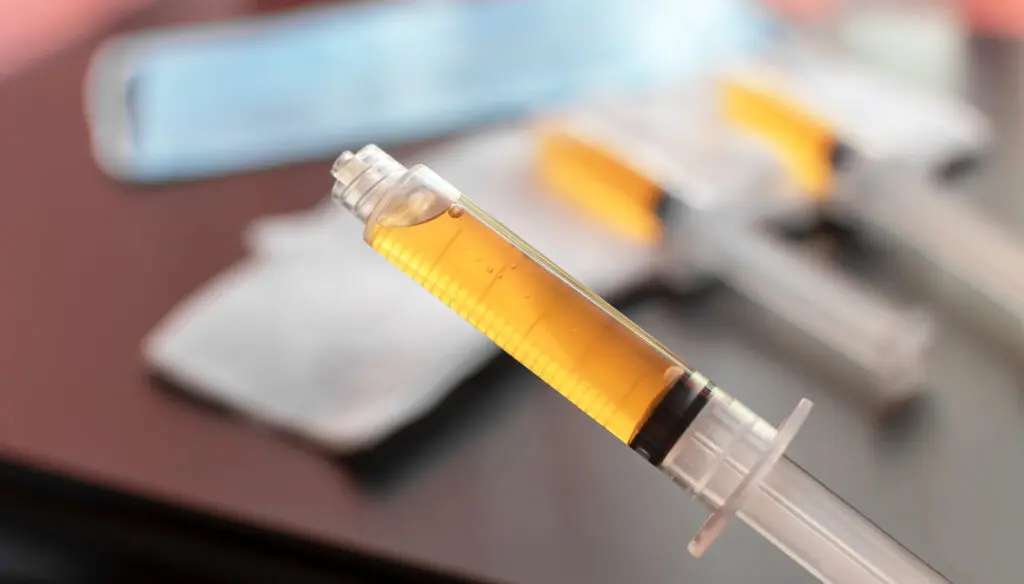
Cortisone injections have long been the standard for joint pain relief. They work by rapidly suppressing inflammation, often providing noticeable relief within 24 to 72 hours. However, cortisone is a synthetic corticosteroid that does not work with the body to promote tissue repair, and repeated injections may weaken tendons and cartilage over time.
PRP takes a different approach. Rather than masking inflammation, PRP injections deliver concentrated growth factors that may stimulate the body’s natural tissue repair process. Relief is more gradual, typically developing over 4 to 6 weeks, but the goal is longer-lasting improvement in joint function.
For patients considering their options, the key distinction is mechanism: cortisone suppresses symptoms, while PRP aims to support the underlying healing process. Your provider can help determine which approach is most appropriate based on your symptoms, severity, and treatment history. Read our detailed PRP vs. cortisone comparison for more information.
The duration of PRP results varies for each individual patient. Published research suggests that many patients with knee osteoarthritis experience symptom improvement for 9 to 12 months after a series of PRP injections. Some patients report benefits lasting beyond one year.
Factors that influence how long PRP results last include the cause and severity of the pain being treated, the patient’s age and overall health, the specific PRP preparation method used, and adherence to post-treatment activity guidelines.
Additional PRP injections may be recommended when symptoms begin to return, but before pain becomes severe. Your QC Kinetix provider will discuss a treatment timeline tailored to your situation during your complimentary consultation.

PRP therapy may be a good option for patients who have chronic joint pain or a soft tissue injury that has not responded adequately to conservative treatments like physical therapy, rest, or anti-inflammatory medications.
Patients who are looking to delay or avoid surgery, athletes recovering from overuse injuries, and individuals with early-to-moderate osteoarthritis are among those who most commonly experience pain relief from PRP.
PRP may not be appropriate for patients who are pregnant, who have cancer, certain blood disorders, active infections, or who are taking blood-thinning medications. A thorough evaluation during your complimentary consultation will determine whether PRP is the right approach for you.
QC Kinetix serves patients throughout 30+ states with professional clinics offering PRP therapy near you. No need to travel internationally, we continue to expand locations where PRP treatment is needed most. Check out our clinics in Asheville, Charleston or Greenville!


PRP therapy offers several advantages over surgical intervention and long-term medication use. Because the treatment uses your own blood, the risk of allergic reaction or rejection is minimal. Most patients experience little to no downtime and can return to daily activities within days.
Key benefits include faster recovery compared to surgical alternatives, no need for general anesthesia or opioid pain medication, minimal risk of infection or scarring, and treatment that works with the body’s natural healing process rather than masking symptoms.
Start your journey toward relief. Schedule a complimentary consultation at QC Kinetix to find out if PRP therapy is right for you.
Most patients describe mild pressure or brief discomfort at the injection site. A local anesthetic may be applied to minimize pain. Some soreness at the injection site is normal for 48 to 72 hours after the procedure. The blood draw itself is similar to a routine lab test.
Initial improvement is often noticeable within 2 to 4 weeks. Peak results typically develop over 3 to 6 months as tissue repair progresses. Individual timelines vary based on the cause and severity of your pain, as well as your overall health.
PRP at QC Kinetix is typically not covered by insurance and is paid out of pocket. Our team can discuss pricing and payment options during your free consultation.
The number of treatments depends on the condition and its severity. Some patients experience improvement after a single injection, while others may benefit from a series of 2 to 3 treatments spaced several weeks apart. Your provider will recommend a personalized plan.
PRP has shown the most consistent results for early-to-moderate osteoarthritis pain. For advanced bone-on-bone cases, PRP may still help reduce inflammation and improve comfort, though expectations should be discussed with your provider during your consultation.
"(Required)" indicates required fields