

Joint discomfort, soreness from cartilage wear, and ongoing irritation in tendons and ligaments can make everyday movement harder – whether that’s walking, playing a sport, or simply getting through your day. If you’re looking for alternatives to surgery or long-term pain medication, biologic options that work with your body are a logical next step to explore.
At QC Kinetix, we offer advanced regenerative medicine treatments designed to support your body’s natural healing processes. One of these options is bone marrow aspirate concentrate (BMAC) injection treatment – a minimally invasive approach that uses your own biologic material to help address joint discomfort and support function. As a leader in regenerative medicine, we focus on personalized plans designed to help you move toward a more active, comfortable life.

BMAC stands for bone marrow aspirate concentrate. In simple terms, it’s a concentrated preparation of the biologic components derived from your own bone marrow. Bone marrow is naturally rich in a range of cells and growth factors that play a part in how your body responds to injury, irritation, and inflammation.
Because BMAC is autologous – meaning it comes directly from your own body – it’s a foundational part of our biologic, drug-free approach to pain. Rather than relying on synthetic substances, a BMAC injection uses your body’s own materials to help support and revitalize the tissues in and around a joint, with the goal of reducing discomfort and supporting how the joint moves and functions.
You may also see BMAC referred to as bone marrow concentrate (BMC) or bone marrow injection. These terms describe the same general approach: concentrating biologic material from the bone marrow and delivering it where it’s needed.
It’s worth noting that BMAC is not the same as a bone marrow transplant or a stem cell transplant. A transplant is a major hospital procedure used for blood and immune-system conditions; BMAC, by contrast, is a minimally invasive, in-office injection used to support musculoskeletal comfort and function. We address this distinction in more detail in the FAQs below.
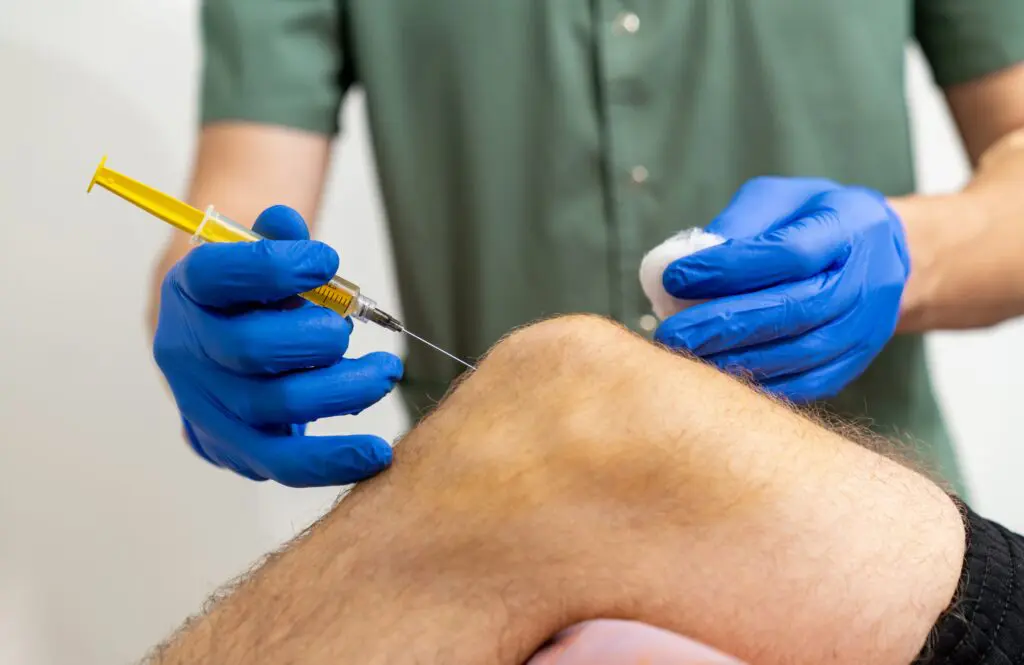
BMAC injection treatment at QC Kinetix is performed right in our clinic, with a focus on your comfort and on delivering a precise, personalized treatment. The procedure generally follows three steps:
Most BMAC injection appointments are completed in a single office visit lasting roughly one to two hours from intake to discharge. Many patients are able to return to their usual routine the same day or the next day, with minimal downtime. The goal is to use these natural orthobiologics to address discomfort from musculoskeletal inflammation, support joint function, and improve your mobility and quality of life.
QC Kinetix serves patients throughout 30+ states with professional clinics offering cellular therapy near you. No need to travel internationally, we continue to expand locations where cellular therapy is needed most.


Patients often choose BMAC because they want a minimally invasive option that works with their body’s natural processes. As part of a personalized plan, BMAC offers several potential benefits:
Ready to explore your options? Schedule a free consultation to learn if BMAC treatment is right for you.

BMAC is versatile and can be part of a comprehensive, personalized treatment plan to ease the discomfort of many musculoskeletal concerns. Below are common areas where BMAC injections are used. In each case, the goal is to help address the pain and discomfort caused by the condition – your provider will discuss whether BMAC is a fit for your specific situation.
Knee pain. Knee discomfort from cartilage wear, meniscus irritation, or arthritis is one of the most common reasons patients explore BMAC. A knee BMAC injection delivers the biologic concentrate directly into the joint to help support comfort and function.
Hip pain. Hip discomfort from cartilage wear, labral irritation, or arthritis-related inflammation may benefit from a BMAC injection that places biologic material into the hip joint. See our hip pain page for more on hip-specific care.
Shoulder pain. Rotator cuff soreness, labral discomfort, and joint irritation in the shoulder are common BMAC applications. The injection targets the area of soreness to help support tissue and reduce discomfort.
Back and spine-related pain. BMAC may be considered as part of a personalized plan for discomfort in the lower back and spine-adjacent soft tissue, particularly where chronic inflammation contributes to soreness.

Ankle, foot, and small joint pain. Smaller joints affected by repetitive use or arthritis-related soreness can also be candidates for BMAC injection treatment.
Cartilage wear, tendons, and ligaments. BMAC is often considered for discomfort associated with cartilage wear, as well as tendon and ligament soreness from sports activity or repetitive strain.
Active adults and athletes. Weekend athletes, runners, and patients who want to maintain an active lifestyle often choose BMAC as an in-office, outpatient option to address sports-related joint and soft-tissue discomfort.
As with any regenerative treatment, individual results vary, and a consultation is the best way to understand whether BMAC may be appropriate for your situation.
BMAC is one of several biologic options at QC Kinetix. During your consultation, our medical team will help determine which approach – or combination – is the best fit for you. Here’s how the main options compare:
Treatment | What it uses | How it is often used |
BMAC (Bone Marrow Aspirate Concentrate) | A concentrate of cells and growth factors from your own bone marrow | Offers a broad biologic profile; often chosen to support more comprehensive joint preservation and comfort. Used for moderate to advanced joint discomfort. |
PRP (Platelet-Rich Plasma) | Concentrated platelets from your own blood | Often used to address inflammation-related discomfort and support natural recovery in joints and soft tissue. Frequently chosen for earlier-stage or milder soreness. |
Plasma Protein Concentrate (PPC) | Proteins concentrated from your own blood, including alpha-2-macroglobulin (A2M) | Designed to help neutralize certain inflammatory proteins within a joint that contribute to the breakdown of cartilage and cause pain. |
The key difference is the biologic profile. PRP draws on the platelets and growth factors in your blood. BMAC provides a broader, more diverse mix of biologic components drawn from your bone marrow, which is why it’s often considered for more comprehensive joint support. In some plans, BMAC is used on its own; in others, it’s combined with PRP or PPC. To learn more, see our PRP treatments and Plasma Protein Concentrate (PPC) pages.
BMAC injection is a same-day, in-office procedure, and most patients return to a relatively normal routine within hours. That said, the body’s response to a regenerative treatment unfolds gradually. Here’s the general timeline patients can expect, with the understanding that individual experiences vary.
The first 48 hours. Mild soreness at the bone marrow collection site (typically the hip) and at the injection site is common and usually resolves on its own. Many patients are walking comfortably the same day. Ice, rest, and gentle movement are typically encouraged. Your provider will give you specific guidance on what to avoid in this window.
The first week. Most patients return to light daily activities – work, walking, basic chores – within a day or two. Strenuous exercise, heavy lifting, and high-impact activity are usually avoided for at least the first week to give the treated area time to settle.
Weeks 2–6. This is the window in which patients commonly begin noticing changes in discomfort and function. Activity is gradually increased based on how your body is responding. Some patients return to most activities by the end of this window.
Months 2–6. The body’s response to BMAC continues to develop over several months. Your provider will check in on progress and adjust your plan if needed. Some patients experience continued improvement well into this window.
Recovery is not the same for every patient. Your provider will set realistic expectations based on your condition, the area treated, and your activity goals.
Your journey begins with a no-obligation, complimentary consultation. Our patient-first approach means clear, transparent guidance so you understand your options. During your visit, you can expect:

BMAC treatment is not suitable for everyone. Contraindications include active cancer, certain blood-borne diseases, and pregnancy. Our medical team will conduct a thorough evaluation to confirm that you are a candidate for our regenerative treatments before moving forward.
BMAC is also not a guaranteed solution. Individual response varies based on the condition, the severity of your pain, the area treated, and personal factors. We believe in transparent communication about realistic expectations – your provider will discuss what BMAC can and cannot offer for your specific situation.
Don’t let joint discomfort dictate how you live. With minimally invasive regenerative treatments from QC Kinetix, you can explore options designed to work with your body – not against it. Learn more about BMAC and our other biologic protocols by scheduling your complimentary consultation today.
BMAC is a biologic treatment that uses a concentrate of cells and growth factors from your own bone marrow to help address musculoskeletal pain and support joint function. Because it comes from your own body, BMAC is considered an autologous, drug-free biologic. It is an in-office injection treatment, not a major medical procedure.
No. A bone marrow transplant is a major medical procedure used to treat blood and immune-system conditions, often involving donor tissue and a hospital stay. BMAC is different: it’s a minimally invasive, in-office injection that uses a concentrate of your own bone marrow to help address musculoskeletal pain and support joint function. The risks, recovery, and purpose are not comparable.
BMAC and stem cell therapy are related but not identical. BMAC is one type of biologic treatment that uses concentrated material from your own bone marrow, which naturally contains a mix of cells and growth factors. Cellular therapy is a broader category that may use biologic cells from various sources. BMAC is sometimes informally referred to as a “stem cell” treatment because bone marrow contains stem cells, but the terms are not interchangeable. Your provider can explain how BMAC fits into the broader category of cellular and regenerative options.
A small bone marrow sample is collected, usually from the hip, using local anesthesia, concentrated using a clinical-grade centrifuge, and then injected into the affected area. There are no incisions, no general anesthesia, and no hospital stay involved.
Most BMAC appointments are completed in a single office visit lasting roughly one to two hours from intake to discharge. The actual collection and injection portion is shorter and usually only takes 10-15 minutes; the additional time accounts for preparation, the centrifuge concentration step, and post-procedure observation.
Most patients describe the BMAC procedure as more comfortable than they expected. Local anesthesia is used at the bone marrow collection site to minimize discomfort during the procedure itself. Mild soreness at the collection and injection sites for a day or two afterward is common and typically resolves on its own. Patients who have concerns about pain are encouraged to discuss them during the consultation, where your provider can walk through what to expect.
Both use materials from your own body. PRP (platelet-rich plasma) is made from concentrated platelets in your blood, while BMAC is derived from your own concentrated bone marrow, which contains a broader mix of cells and growth factors. Because of that wider biologic profile, BMAC is often considered for more comprehensive joint support, while PRP is often used for earlier-stage or milder soreness. Your provider can explain which option may suit your situation.
Neither treatment is universally “better” – they’re different tools for different situations. PRP is often a strong fit for earlier-stage discomfort and soft-tissue irritation, while BMAC is more commonly chosen for more advanced joint discomfort or where a broader biologic profile may help. In some personalized plans, both are used together. The right choice depends on your specific concern, the joint involved, your goals, and your provider’s assessment during the consultation.
Cellular therapy uses biologic cells sourced from your own body to support healing in joints and soft tissue. BMAC is one source of such biologic material, drawn specifically from your bone marrow. The right option depends on your condition and goals, which your medical team will assess during your consultation.
Patient response to BMAC varies, and there is no single published “success rate” that applies to all patients or concerns. Studies have suggested that BMAC injections may help reduce pain associated with joint conditions such as knee osteoarthritis and support improved physical function, though the evidence base continues to develop and outcomes are not guaranteed.¹
Several factors influence response: the condition causing the pain, its severity, the joint or area involved, your overall health, and your activity level. Some patients report meaningful pain reduction and improved function within weeks; others may need additional sessions or complementary treatments. A consultation is the best way to discuss realistic expectations for your specific situation.
This is one of the most common questions patients ask. The honest answer is that research into BMAC’s effect on cartilage is ongoing. Some studies have explored whether BMAC may help support joint structure and reduce pain associated with cartilage wear, but there is currently no clinical guarantee that BMAC regrows cartilage.
Where BMAC may help is in addressing the pain and inflammation associated with cartilage wear, supporting joint function, and helping patients delay or avoid more invasive options. As with any regenerative treatment, individual response varies. Your provider will discuss what BMAC can realistically offer for your specific condition.
Because BMAC uses your own biologic material, the risk of an allergic reaction is low. As with any injection, there’s a possibility of temporary soreness, minor bruising, or – less commonly – infection at the collection or injection site. Most patients experience only mild, short-lived soreness. Our medical team reviews your health history to help determine whether BMAC is appropriate for you.
Individual results vary. Some patients report noticing changes within a few weeks, while the body’s response to regenerative treatment can continue to develop over several months. Your provider will set realistic expectations based on your specific situation. See the “What to Expect After BMAC” section above for a fuller recovery timeline.
BMAC and other regenerative treatments at QC Kinetix are out-of-pocket. The exact cost depends on your personalized treatment plan, which is determined during your complimentary consultation based on the area being treated and the recommended protocol. Payment plans are available to help make treatment accessible.
BMAC and most regenerative treatments are not currently covered by insurance, including Medicare. Regenerative medicine is considered an emerging field by most insurance providers, and coverage policies have not kept pace with the science. Because of that, BMAC is offered on an out-of-pocket basis, and payment plans are available to help.
Many regenerative medicine treatments are considered qualified medical expenses by the IRS. This means you can often use your HSA or FSA funds to cover the costs. At QC Kinetix, we gladly accept both HSA and FSA funds for our treatments. However, we always recommend confirming coverage with your specific HSA/FSA provider beforehand.
Many active adults dealing with joint pain, arthritis soreness, or sports-related discomfort are candidates. BMAC may also be considered by people who want a minimally invasive option, who have not had success with other approaches, or who want to address discomfort before considering surgery. BMAC is not appropriate for everyone. Contraindications include active cancer, certain blood-borne diseases, and pregnancy. A consultation and evaluation are required to confirm whether BMAC is a good fit (see Important Considerations).
"(Required)" indicates required fields