
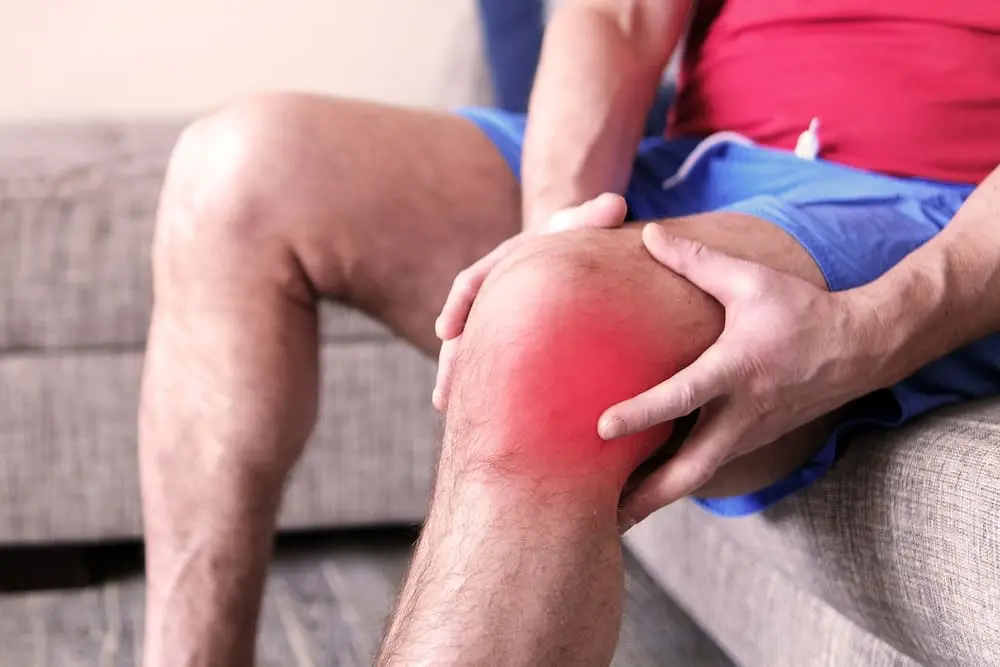
Why is my knee popping? Knees pop, crack, and click for ordinary reasons, and the sound alone is rarely a sign that something is wrong. What matters more is what comes with it.
Knee popping generally falls into two categories:
- Painless, occasional popping, which often happens during normal joint movement
- Popping accompanied by pain, swelling, stiffness, or instability, which deserves closer attention
Below, we review both and what to do about each.
Explore Non-Surgical Options for Knee Pain
Why Is My Knee Popping?
Knee popping usually comes from routine mechanical activity inside the joint. Cartilage, ligaments, tendons, and lubricating fluid all move together as you bend, and any of them can click.
Common sources include:
- Pressure changes in joint fluid. Gas bubbles form and collapse in the fluid that lubricates the knee.
- Tendons and ligaments moving during motion. One can snap as it glides across a bony edge and settles back into place.
- Cartilage surfaces. Rough or uneven cartilage may catch slightly as the joint moves.
- Meniscus problems. A torn or frayed meniscus can catch as the knee bends.
- Ligament injuries. A stretched or torn ligament changes how the knee tracks, which can bring popping along with looseness.
- Age-related joint changes. Cartilage thins over the years, and noises become more noticeable as it does.
According to the American Academy of Orthopaedic Surgeons, knee sounds can come from several different structures, so the noise alone rarely tells the whole story.
Is Painless Knee Popping Normal?
Occasional knee popping without pain or swelling is common and generally less concerning. Many people hear a click when they stand up or climb stairs but aren’t limited by it. Without discomfort, swelling, catching, or loss of motion, it usually isn’t cause for alarm.
What Does It Mean When Your Knee Pops and Hurts?
When your knee pops and hurts, the pain matters most. It suggests a structure in or around the joint is irritated, worn, or injured rather than simply making noise. Popping that builds up gradually alongside stiffness differs from popping that starts the instant you twist or land.
What Does a Loud Pop in the Knee Followed by Pain Mean?
A sudden loud pop with immediate pain often means an acute injury has just happened, usually during a pivot, an awkward landing, or a direct blow.
Symptoms that may indicate a more serious injury include:
- Swelling, particularly within the first few hours
- Stiffness
- Reduced range of motion
- Weakness in the leg
- A sense of instability
- The knee giving way underneath you
- Difficulty bearing weight
If your knee is also locking up or catching, have it evaluated promptly.
What Can Cause Knee Popping and Pain?
Several different problems produce the same combination of noise and discomfort.
Meniscus Injuries
The meniscus is a pair of C-shaped cartilage cushions that absorb shock and keep the joint stable. A twist with the foot planted can tear it, and years of wear can leave it frayed enough to tear during ordinary movement. Clicking while bending is a hallmark, often with swelling or restricted motion. QC Kinetix offers non-surgical treatment options for meniscus pain.
Ligament Injuries
Ligaments control how far the knee travels in each direction. The ACL is the one most often injured during cutting and pivoting sports, and a tear frequently announces itself with an audible pop, rapid swelling, and a lasting sense that the knee could give out. Depending on the injury’s severity, a non-surgical approach to ACL-related pain may be an option.
Cartilage Wear and Osteoarthritis
Crepitus is the grinding or crunching that occurs when cartilage surfaces are no longer smooth. As the knee lining thins, the joint moves with more friction, producing noise along with stiffness and arthritis-related soreness that is often worst in the morning. QC Kinetix offers non-surgical options for osteoarthritis-related pain.
Tendon Problems
Tendons around the knee can snap or catch as they travel across bony surfaces. Overuse is a frequent culprit, especially for runners adding mileage or hills. The result is often a popping sensation near the kneecap with an ache that sharpens during activity, a pattern sometimes called runner’s knee pain.
Because these problems have many similarities, a medical evaluation is the best way to determine what is causing your knee popping and pain.
Can Arthritis Cause Knee Cracking and Pain?
Knee cracking and pain can accompany arthritis pain, though the noise alone confirms nothing. As cartilage changes with age or wear, joint surfaces lose smoothness, friction increases, and crepitus becomes more audible. Stiffness and arthritis-related soreness often develop alongside it, and symptoms are usually most noticeable during movement.
Knee noises alone do not establish an arthritis diagnosis. Many people have cracking knees with no pain and no underlying joint disease. Only a qualified provider can determine the cause of your symptoms.
When Should You See a Medical Provider About Knee Popping?
See a medical provider if knee popping comes with pain or any change in how your knee functions.
Schedule an evaluation if your knee popping occurs with:
- Persistent or significant pain
- Swelling that does not resolve
- Inability to bear weight on the leg
- Reduced range of motion
- Instability or buckling
- A sudden injury
- Symptoms that continue or worsen
It’s a good idea to seek a diagnosis relatively quickly once you begin to experience symptoms. Early-stage treatment may mean you have more options for pain relief.
What Non-Surgical Options Are Available for Knee Pain?
Treatment depends on what is causing your symptoms, which is why evaluation comes first. Depending on your provider’s assessment, conservative care may include:
- Activity modification and load management
- Guided rehabilitation and strengthening programs
- Bracing, ice, and other conventional conservative care
- Regenerative medicine for the pain from appropriate musculoskeletal conditions
Our regenerative health providers offer non-surgical knee pain treatments for discomfort associated with osteoarthritis, meniscus injuries, cartilage wear, ligament and ACL injuries, and other musculoskeletal conditions.
Still relying on short-term relief for ongoing joint discomfort?
QC Kinetix offers non-surgical treatment options designed to support the body’s natural healing response- with no downtime and no surgery required.
Could Regenerative Medicine Be an Option for Your Knee Pain?
Regenerative medicine may be an option if your knee pain stems from certain musculoskeletal conditions. Our regenerative treatments work with your body’s own processes. Potential options may include:
- PRP. Platelets are concentrated from a small sample of your own blood and prepared as part of a PRP treatment plan.
- BMAC. A cellular treatment that includes living cells, growth factors, and important proteins designed to support your body’s natural processes.
- Plasma Protein Concentrate. A preparation drawn from your own blood and used to address joint discomfort.
- Other natural biologics. Additional orthobiologic options your provider may recommend.
These treatments address the pain associated with musculoskeletal conditions, not the popping itself. But they are not right for everyone. Patients who are pregnant or nursing, undergoing active cancer treatment, or managing certain blood or infection concerns may not be candidates. Individual results vary.
Have Knee Popping with Pain? Request an Appointment Today
If knee popping is accompanied by ongoing pain or discomfort, you don’t have to just live with it.
Schedule a consultation to learn whether you are a candidate for non-surgical knee pain treatment. You can request your first appointment online or by phone.
Frequently Asked Questions
Why is my knee popping when I bend it?
Bending moves tendons, ligaments, and cartilage surfaces past one another, and gas bubbles in the joint fluid can pop as well. Painless popping is generally not a concern. If it hurts, catches, or swells, have it checked.
Why is my knee popping and hurting?
Pain with popping suggests a structure in or around the joint is irritated, worn, or injured. Meniscus problems, ligament injuries, cartilage wear, and tendon irritation are common explanations, and only an evaluation can tell you which applies to you.
Does knee popping mean arthritis?
No. Crepitus is associated with cartilage changes, but many people have noisy knees with no pain and no underlying joint disease.
What does a loud pop in my knee followed by pain mean?
It often signals an acute injury, particularly during a twist, pivot, or landing. Rapid swelling, instability, or trouble bearing weight make prompt evaluation more urgent.
Can knee popping and pain be treated without surgery?
In many cases, yes. Conservative care, guided rehabilitation, and regenerative medicine may all be appropriate depending on the source of your symptoms. We confirm candidacy during your consultation, and individual results vary.
This content is for informational purposes only and is not a substitute for medical advice, diagnosis, or treatment. Talk with a qualified medical provider about your symptoms. Individual results vary.


