

At a Glance
Shoulder surgery costs vary by procedure – from arthroscopic repairs to full shoulder replacement – with total cost driven by surgeon fees, facility fees, anesthesia, and post-surgical care like physical therapy.
Unlike many regenerative treatments, most shoulder surgeries, including rotator cuff repair and replacement, are typically covered by major insurance plans, though out-of-pocket cost depends on your specific deductible.
Patients weighing shoulder surgery often consider non-surgical alternatives too, since costs stack up quickly once imaging, therapy, and time away from work are factored in.
Your shoulders are the most flexible joints in your body, and among the most commonly injured. Severe shoulder pain can turn simple tasks like bathing and dressing into a real challenge.
Rotator cuff repair alone accounts for over 460,000 procedures a year in the U.S. (iData Research, 2025), making it one of the most common orthopedic soft tissue repairs performed. This guide breaks down the costs of different shoulder surgeries and the alternatives available.
What Factors Into the Cost of Shoulder Surgery?
Shoulder surgery cost depends mainly on the type of surgery, your insurance coverage, and where the procedure is performed. Beyond the surgery itself, several other factors add to the total:
- Surgeon and facility fees, typically billed by procedure rather than by the hour
- Anesthesia fees
- Imaging, such as X-rays or MRIs
- Physical therapy and post-surgical medications
- Lost work time
- Surgeon and anesthesiologist experience, and the type of facility (hospital vs. outpatient center)
More complex injuries generally take longer to repair and cost more than straightforward cases.
Cost Breakdown by Common Procedures
To simplify the question, let’s examine how much shoulder surgery costs without insurance. We’ll look at several common surgeries. According to MDSave, these are the average shoulder surgery costs across the country:
Rotator cuff surgery
Shoulder arthroscopy
Shoulder arthroscopy with SLAP lesion repair
Complete shoulder replacement (outpatient)
Complete shoulder replacement (inpatient)
These surgical costs vary by the region, location, and facility where the shoulder surgery is performed. The severity of the injury and the patient’s age and general health are additional variables that can affect the procedure recommended and extra care required, which can impact the cost.
Discovering Non-Invasive Options at QC Kinetix
Once people learn how much shoulder surgery costs, they often look for alternatives. When you factor in pain, scarring, extended physical therapy, and lost work time, it’s easy to see why demand for non-surgical options continues to grow.
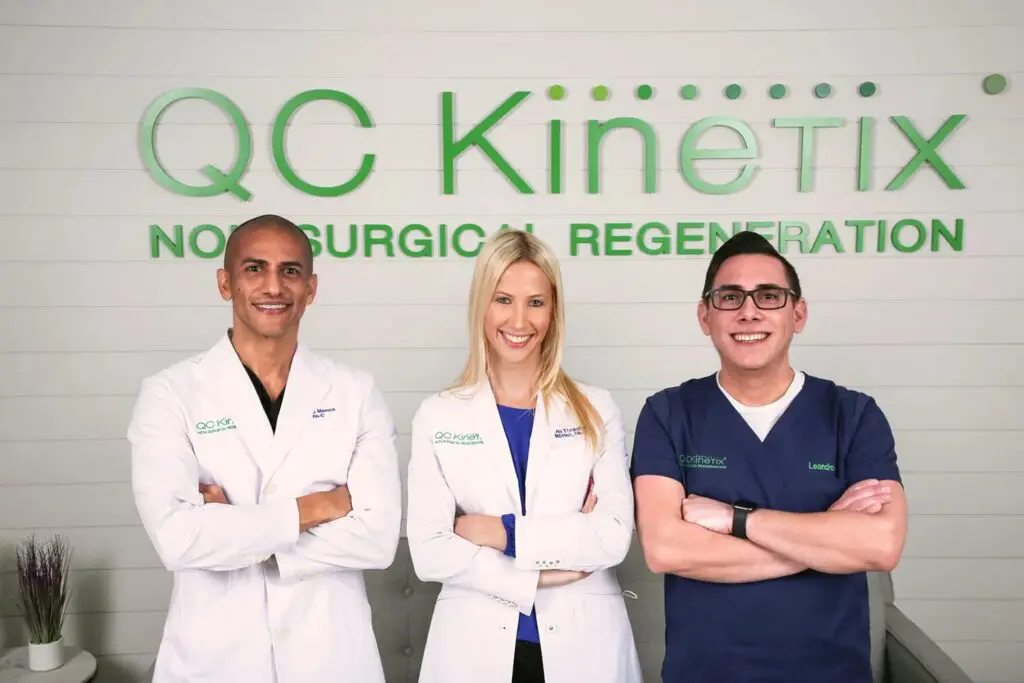
QC Kinetix offers a non-surgical, drug-free path to pain relief that supports shoulder function, strength, and mobility. Regenerative medicine for shoulder pain works with your body’s own repair process, targeting the source of your pain.
Our minimally invasive, drug-free treatments aim to support your body’s own repair process. You may feel some soreness for a couple of days, but there’s typically no need to miss work or sideline your favorite hobbies.
Elevate Your Shoulder Health With QC Kinetix
If you suffer from shoulder pain or have been told you need shoulder surgery, you owe it to yourself to consider your options. In some cases, surgery is the best solution. But for most people, regenerative therapy alleviates their pain, allowing mobility, strength, and function to return without the costs and the pain of surgery.
Find your local QC Kinetix clinic to Book a Consultation today, or contact us with any questions.
Shoulder Surgery FAQs
Is shoulder surgery covered by insurance?
Yes — shoulder surgeries, such as replacement, rotator cuff repair, and reconstruction, are typically covered by major insurance companies. Your specific insurance plan, deductibles, co-pays, and reason for the surgery will all factor into how much the shoulder surgery costs. You must choose a surgeon and facility that your specific plan covers.
How long is bed rest after shoulder surgery?
Typically, you will not be confined to bed rest following shoulder surgery. However, you will have to wear a sling, restrict your activities, and sleep in a recliner for four to six weeks, depending upon the type of shoulder surgery you need. Your surgeon will provide detailed recommendations.
Do you have to sleep in a chair after shoulder surgery?
No, you’re not required to sleep in a chair after every type of shoulder surgery, but it is often recommended. It can be very painful to sleep fully reclined for a few weeks after shoulder surgery. Sleeping in a chair or on an incline is often advised to aid healing and reduce pain, particularly after certain procedures like rotator cuff repair.
Ready to start your healing journey?
Discuss personalized treatment options with our team today.
Book a Consultation

