

Knee pain has a way of showing up right when you least want it, halfway down a steep descent or the morning after a long day on the trail. For many Denver hikers, the discomfort builds on the way down, lingers for a day or two, then returns on the next outing. You may have started planning hikes and rearranging other activities around your hiking knee pain. That’s no good.
Hiking places heavy, repetitive stress on the knee joint. You may have first noticed your knee pain hiking downhill. The downhill portion of a hike tends to be the hardest on the joints; descents, sustained elevation change, uneven footing, and a loaded pack all add up. Along the Front Range and on Colorado’s Fourteeners, that’s hard to sidestep; nearly every summit means a long, knee-intensive hike back down.
If this describes your discomfort, QC Kinetix in Denver offers nonsurgical options to manage hiking-related knee pain, drawing on your body’s own healing processes rather than surgery or lengthy recovery periods. Our approach to regenerative medicine is designed to help you decrease pain and restore function so you can stay active on the trails you love.

Hiking is demanding on the knees, and descents in particular put outsized stress on the joint compared with flat or uphill terrain. Every step down asks the knee to absorb your body weight plus the weight of your pack. Over time, that repetitive loading can produce a familiar set of symptoms.
Our patients often describe this type of hiking knee pain:
Front Range and Fourteener trails involve significant elevation change, which puts sustained downhill loading on the knees that flatter terrain simply does not. The mechanics of knee pain while hiking help explain why recurring knee pain is such a common complaint among Colorado hikers.
For hikers seeking alternatives before committing to surgery, QC Kinetix offers nonsurgical treatments to support joint comfort and function. These are outpatient treatments with no hospital stays or general anesthesia, and each plan is tailored to the individual rather than following a one-size-fits-all protocol.
PRP treatments use concentrated platelets collected from your own blood. Once concentrated, the platelets are delivered to the affected knee joint, with the goal of supporting the body’s natural healing response. This treatment
Some patients notice changes within weeks, with more meaningful improvement developing over three to six months. Individual results vary.
Our cellular therapy uses bone marrow aspirate concentrate, or BMAC, collected from your own body. BMAC contains living cells, growth factors, and other important proteins, and is designed to support the body’s natural processes in areas of discomfort. Treatment is performed on an outpatient basis and personalized to each patient. As with PRP, individual results vary.

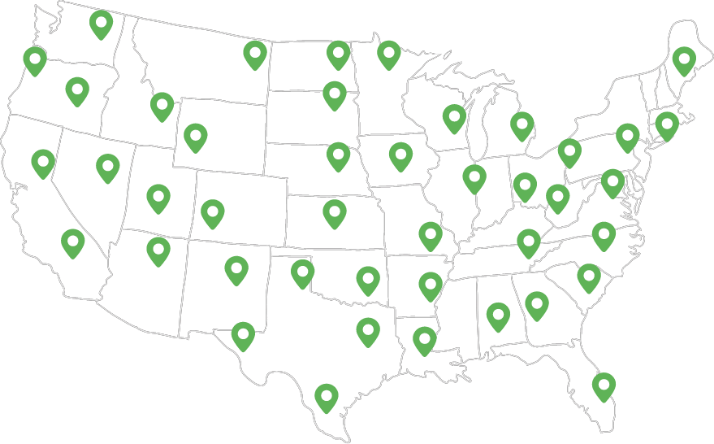
QC Kinetix serves patients throughout 30+ states with professional clinics offering cellular therapy near you. No need to travel internationally, we continue to expand locations where cellular therapy is needed most.

Before committing to surgery, some Denver patients explore nonsurgical options to manage knee pain and stay active on the trail. These treatments are outpatient, with no hospital stay and lower downtime than surgery typically requires, which, for many active adults, means less time away from the activities that matter most.
Whether your goal is tackling another Fourteener, getting back on a favorite Front Range trail, or staying active into retirement, keeping your knees working is central to the plan. Some hikers also notice hip pain after hiking, since the two joints share the load on long descents, and both may be worth discussing at a consultation.
Regenerative medicine is not the right fit for everyone. These treatments are generally not recommended if you are:
Surgery may still be necessary in severe cases, and a consultation is the best way to understand your options. Curious whether you may be a candidate? Book a Consultation.
Reasons athletes across the Front Range choose QC Kinetix’s non-surgical knee pain treatment for hikers:
You can find our Denver locations across the metro area, and we also serve nearby communities, including Boulder, Colorado Springs, and Broomfield.

PRP is designed to support your body’s natural healing response in the affected knee joint. It may help reduce discomfort and improve function for hikers dealing with recurring knee pain, though individual results vary.
Descending puts your knees to work absorbing your body weight plus your pack with each step, placing more stress on the joint than flat or uphill walking. This repetitive loading is a common source of hiking-related joint discomfort, which is why downhill sections often trigger or worsen knee pain.
QC Kinetix Denver offers nonsurgical, outpatient options including PRP treatments that are minimally invasive and designed to support the body’s natural healing processes.
Some hikers experience hip pain alongside knee pain, particularly during long descents. Regenerative medicine may be used to address hip discomfort as well, and a consultation can help determine what is appropriate for you.
If your knee pain keeps returning after hikes, lingers for days, or is causing you to cut back on the trails, it is worth having it evaluated. Addressing recurring discomfort sooner rather than later usually gives you more options.
Coverage varies, and many regenerative treatments are not covered by insurance. Our team can walk you through costs and options during consultation.
Many active adults with hiking-related knee pain may be candidates, but these treatments are not recommended for everyone, including those who are pregnant, immunocompromised, or living with active cancer. A consultation is the best way to find out.
Hiking-related knee pain does not have to mean staying off the trail. Before committing to surgery, explore minimally invasive treatment options with the regenerative health providers at QC Kinetix Denver, and take a step toward staying active in the mountains you love.
Medical Disclaimer
The information on this page is for educational purposes only and is not medical advice. It is not intended to diagnose, treat, or replace guidance from a qualified healthcare provider. Individual results vary. A consultation with the regenerative health providers at QC Kinetix can help determine whether these treatments may be appropriate for you.
"(Required)" indicates required fields