Conditions Treated > ACL Pain Relief

ACL Pain Relief

ACL Pain Treatment – Regenerative Knee Pain Relief

At QC Kinetix, we offer regenerative ACL pain treatment designed to help your knee heal naturally without the need for invasive surgery.
Our medical providers create custom treatment plans that target the root cause of your ACL pain and support your body’s natural healing processes.

No incision
No added pain
No scarring
No prescription medication
No surgical complications
No downtime

Discover how regenerative medicine can help you avoid surgery and regain comfort and mobility. Schedule your free consultation with us today!

What is

Understanding ACL Tears

An ACL tear, or sprain, is graded based on its severity. These grades are a quick way for medical professionals to describe the extent of the damage. Regenerative medicine has shown promise as a non-surgical treatment for certain types of ACL tears, but its effectiveness depends heavily on the grade of the injury.

Three Grades of ACL Tears

There are three grades of ACL tears, according to the level of severity:

  • Grade 1: This is the mildest form of an ACL injury. The ligament has been stretched and slightly damaged, but it’s still intact and provides adequate stability to the knee joint. Patients with a grade 1 sprain usually experience some pain and swelling but can typically still walk without much discomfort.
  • Grade 2: This is a partial tear of the ACL. The ligament is stretched to the point of becoming loose, and some of its fibers are torn. This grade is less common than a grade 1 or 3 tear. A grade 2 tear can cause some instability in the knee and may require more intensive treatment.
  • Grade 3: This is a complete tear or rupture of the ACL. The ligament has been torn in half or has been pulled completely off the bone. A grade 3 tear results in a significantly unstable knee joint, often causing the knee to “give out.” This type of ACL injury typically requires surgical repair.

Understanding ACL Surgery

Depending upon the nature of the ACL tear, its location (closer to the tibia or femur), and the patient’s age, fitness, and general health, there are three primary types of conventional ACL surgery:

  • Autograft ACL Reconstruction – reconstructs the ACL using another tendon from the patient’s body, such as the patellar tendon, hamstring, or quadriceps.
  • Allograft ACL Reconstruction – uses a donated tendon from a cadaver for the repair.
  • Primary ACL Repair – attempts to repair the damaged ligament directly.

Disadvantages of ACL Surgery

Generally, all surgeries share the following disadvantages:

  • Added pain
  • Anesthesia
  • Additional tissue damage
  • Scar tissue
  • Risk of complications
  • Lengthy and painful recovery
  • Narcotics
  • Risk of developing post-traumatic arthritis

Regenerative medicine is an exciting field that provides pain relief, increases function, and improves your range of motion without the drawbacks of surgery listed above. Non-surgical regenerative ACL pain treatments can work with your body to treat the pain associated with grade 1 and 2 ACL injuries, harnessing its natural healing and repair mechanisms to improve the function of the injured knee.

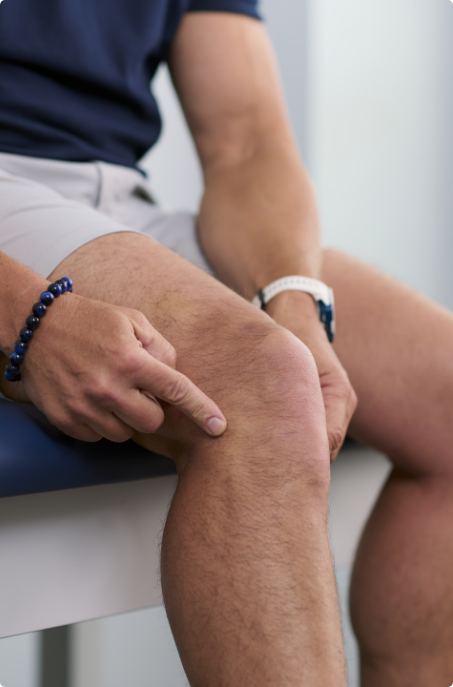
Are You a Candidate for Regenerative ACL Treatment?

To determine if you are a candidate for regenerative ACL therapy, schedule a free consultation at the QC Kinetix location near you. You will meet with our team, and we will review your medical records, answer your questions, and conduct a complete exam.

Factors that generally make someone a good candidate for regenerative ACL treatment at QC Kinetix, or similar clinics, include:

  • You have a partial ACL tear (Grade 1 or 2). Regenerative treatments work by stimulating the body’s natural healing processes. For a complete tear (Grade 3), there is no longer a bridge of tissue for the body to heal, so a surgical reconstruction is typically needed for stability.
  • You want to avoid surgery.
  • You want to avoid taking strong prescription pain medications.
  • You can’t take time off work.
  • You may not be a good candidate for surgery.
  • You want a shorter recovery time and minimal downtime.

If you want to explore a non-invasive alternative to treat the pain of your torn ACL, contact your local QC Kinetix. We’re here to help!

Benefits of

Benefits of Regenerative ACL Tear Treatment

Regenerative ACL treatment without surgery provides numerous benefits:

  • Non-Invasive Approach: By avoiding incisions and cutting of tendons, ligaments, or muscles, regenerative therapy lets you avoid anesthesia, the development of scar tissue, and the risk of surgical complications and infections.


  • Faster Recovery Time: By skipping doing additional tissue damage, you won’t need to take weeks off from work or driving. Take it a bit easy for a day or two, but there’s no need to miss a day of work.
  • Natural Healing: Regenerative therapy harnesses the body’s natural healing processes. It reduces complication risk, minimizes tissue damage, and can lead to a more holistic, sustainable, as well as long-term recovery.

Ready to reduce your ACL pain without surgery? Getting started is simple:

Just schedule your free consultation at your local QC Kinetix clinic. Be sure to bring your medical records and a list of questions. Before your appointment, learn what to expect from QC Kinetix.

Success Stories

Contact Us

"(Required)" indicates required fields

This field is for validation purposes and should be left unchanged.
Chosen Location
Secret Link