
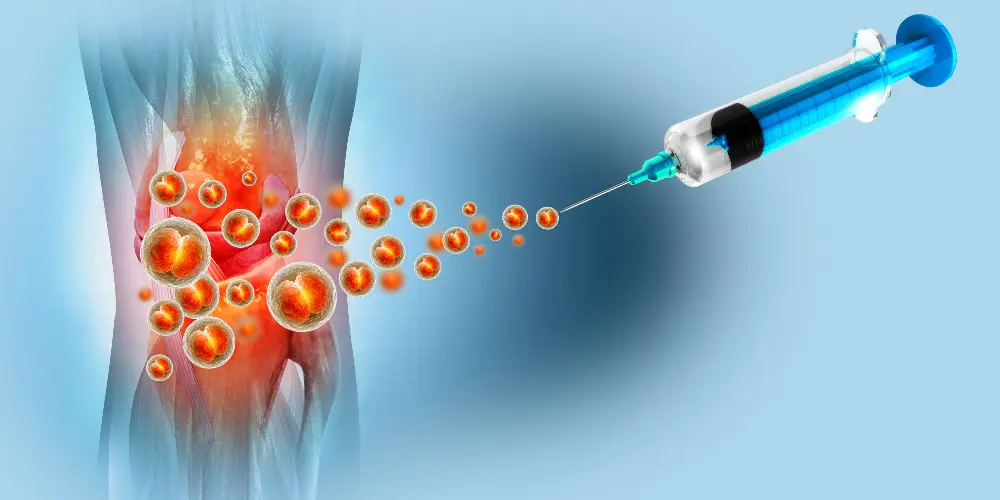
Living with chronic joint pain can feel like a constant battle, limiting your ability to enjoy daily activities, stay active, and live life to the fullest. For many, the prospect of surgery or a long-term reliance on pain medications feels like the only option. But what if there was another way? At QC Kinetix, we believe in tapping into your body’s natural ability to restore function. One key component of our nonsurgical approach is the use of platelet-rich plasma (PRP) for arthritis and other types of pain.
This advanced biologic treatment offers hope by using your body’s own components to reduce discomfort and improve mobility. If you’re seeking an alternative to invasive procedures, discover how PRP for arthritis could be the solution you’ve been looking for. Schedule a free consultation to learn more about our regenerative medicine treatments.
What is PRP Treatment?
Platelet-rich plasma (PRP) is a type of orthobiologic treatment, meaning it is derived from natural substances found within the human body. The process is simple and straightforward. It begins with a small sample of your own blood, similar to a routine blood draw. This sample is then processed to concentrate the platelets, which are tiny blood cells packed with powerful growth factors.
These growth factors are your body’s natural signaling agents, playing a crucial role in its recovery processes. Once concentrated, the platelet-rich plasma is injected back into the area experiencing pain or stiffness. This nonsurgical treatment is designed to stimulate your body’s internal healing process, to support a better internal environment for your joints.
How PRP Supports Arthritis Pain Relief
When introduced to a joint affected by arthritis pain, the concentrated growth factors in PRP can help in several ways. The primary goal of PRP for knee arthritis or other joints is to help modulate inflammation, a key driver of pain and stiffness. By creating a more balanced joint environment, this treatment can lead to a reduction in soreness and an improvement in overall function.
While PRP is not a cure for arthritis, it is a supportive treatment aimed at improving your quality of life. It works by galvanizing your body’s natural recovery systems to help revitalize tissues and enhance joint mobility. Many patients begin to notice improvement over several weeks, with the full benefits often observed within 3–6 months as the body responds to the treatment. This approach aligns perfectly with the principles of regenerative medicine—assisting the body to help itself.
Common Areas Treated with PRP
Because PRP leverages your body’s own biologics, it is a versatile option for addressing arthritis pain in various joints.
- Knees: Arthritis pain in the knees is a leading cause of mobility issues. Our goal is to treat knee pain without surgery, helping you walk, climb stairs, and stand with greater comfort. The use of PRP for knee arthritis is one of our most common applications.
- Shoulders: A stiff and painful shoulder can make simple tasks like reaching or lifting feel impossible. Our shoulder pain therapy protocols, which often use PRP for shoulder arthritis, aim to improve your range of motion and reduce daily discomfort.
Who is a Good Candidate for PRP Treatment?
PRP treatment may be an excellent option for individuals who:
- Experience chronic joint pain due to arthritis or other musculoskeletal conditions
- Are looking for nonsurgical and drug-free alternatives
- Wish to avoid the lengthy downtime associated with surgery
- Have been told joint replacement is their only option, but want to explore other paths first
- Want to improve their joint function and return to an active lifestyle.
Platelet-rich plasma injections are not suitable for everyone. If you are pregnant, have active cancer, are undergoing chemotherapy or radiation, have a compromised immune system, or are on dialysis, this treatment is not suitable for you at this time.
Frequently Asked Questions (FAQ)
Does PRP help arthritis?
Yes. PRP treatment may help relieve arthritis-related discomfort by supporting natural tissue response and improving joint function. Many patients experience improved flexibility and reduced stiffness over time.
How does PRP treat arthritis pain?
PRP uses platelets from your own blood, which release growth factors that may help reduce inflammation and support joint health. This can promote long-term comfort without surgery.
Is PRP treatment a cure for arthritis?
No. PRP is not a cure, but it’s designed to help manage symptoms and support your body’s natural recovery process for better mobility and quality of life.
Why Choose QC Kinetix for PRP Treatment?
At QC Kinetix, our medical team is dedicated to helping you achieve a higher quality of life through innovative, nonsurgical treatments. We provide customized care plans tailored to your unique condition and goals. By focusing on biologic treatments like PRP for arthritis, we offer a path toward improved comfort and mobility that avoids the risks and recovery time of a surgical procedure. Let our experienced medical team guide you toward a more active future.
Ready to Explore Your Options?
Discover if PRP treatment could help your arthritis symptoms. Schedule your consultation today at one of our local Regenerative Medicine treatment centers to explore nonsurgical options for joint pain relief.
SOURCES: